Free PDF Research Design: Quantitative, Qualitative, Mixed Methods, Arts-Based, and Community-Based Participatory Research Approaches
Research Design: Quantitative, Qualitative, Mixed Methods, Arts-Based, And Community-Based Participatory Research Approaches. A work might obligate you to consistently improve the expertise and also experience. When you have no enough time to improve it directly, you could obtain the experience and knowledge from reviewing guide. As everybody understands, book Research Design: Quantitative, Qualitative, Mixed Methods, Arts-Based, And Community-Based Participatory Research Approaches is very popular as the window to open the globe. It suggests that reviewing book Research Design: Quantitative, Qualitative, Mixed Methods, Arts-Based, And Community-Based Participatory Research Approaches will certainly give you a new way to discover everything that you need. As guide that we will supply right here, Research Design: Quantitative, Qualitative, Mixed Methods, Arts-Based, And Community-Based Participatory Research Approaches
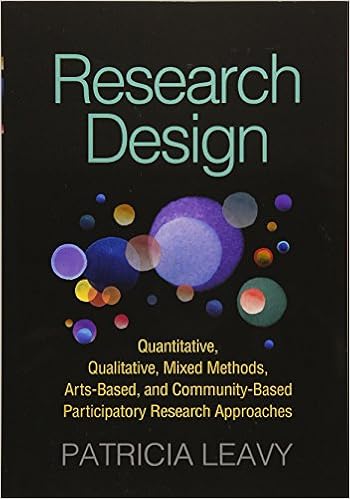
Research Design: Quantitative, Qualitative, Mixed Methods, Arts-Based, and Community-Based Participatory Research Approaches

Free PDF Research Design: Quantitative, Qualitative, Mixed Methods, Arts-Based, and Community-Based Participatory Research Approaches
Do not you believe that you need new method to lead your space time much worthier? Maintain forward with good routine. Reading is just one of the most effective suggestions for you. But, choosing the most effective analysis publication is likewise vital. It will influence how you will certainly obtain the advancements. It will certainly reveal you the top quality of the book that you read. If you require the kind of publication with top quality, you can choose Research Design: Quantitative, Qualitative, Mixed Methods, Arts-Based, And Community-Based Participatory Research Approaches Why should be this publication? Come on follow us to understand why and also ways to get it.
Obtaining guides Research Design: Quantitative, Qualitative, Mixed Methods, Arts-Based, And Community-Based Participatory Research Approaches now is not sort of challenging means. You could not only going for book shop or library or borrowing from your good friends to read them. This is a really easy way to exactly get the publication by on the internet. This on the internet book Research Design: Quantitative, Qualitative, Mixed Methods, Arts-Based, And Community-Based Participatory Research Approaches can be one of the choices to accompany you when having downtime. It will certainly not squander your time. Believe me, the book will show you brand-new thing to check out. Merely spend little time to open this online e-book Research Design: Quantitative, Qualitative, Mixed Methods, Arts-Based, And Community-Based Participatory Research Approaches and also review them any place you are now.
Why must be reading Research Design: Quantitative, Qualitative, Mixed Methods, Arts-Based, And Community-Based Participatory Research Approaches Once more, it will certainly depend upon just how you really feel as well as consider it. It is surely that of the advantage to take when reading this Research Design: Quantitative, Qualitative, Mixed Methods, Arts-Based, And Community-Based Participatory Research Approaches; you could take much more lessons directly. Even you have not undergone it in your life; you could gain the encounter by checking out Research Design: Quantitative, Qualitative, Mixed Methods, Arts-Based, And Community-Based Participatory Research Approaches And currently, we will certainly introduce you with the on-line publication Research Design: Quantitative, Qualitative, Mixed Methods, Arts-Based, And Community-Based Participatory Research Approaches in this web site.
This recommended book qualified Research Design: Quantitative, Qualitative, Mixed Methods, Arts-Based, And Community-Based Participatory Research Approaches will be able to download and install quickly. After getting the book as your selection, you could take more times or perhaps couple of time to begin analysis. Page by page may have superb conceptions to read it. Several reasons of you will enable you to review it sensibly. Yeah, by reading this book and finish it, you can take the lesson of just what this publication offer. Get it and populate it carefully.
Review
"An excellent introductory text for an undergraduate- or master's-level research methods class. The book provides a thorough introduction to five approaches to research commonly used in the social and behavioral sciences, offering detailed guidance on how to write a proposal in each genre. The writing style is very readable, with clear explanations of concepts and vocabulary and examples from many different fields. Ethics in research is emphasized throughout. Other strengths include a comprehensive discussion of how to write surveys. This is a very accessible book."--Barbara B. Levin, PhD, Department of Teacher Education and Higher Education, University of North Carolina at Greensboro "The most accessible, comprehensive, and up-to-date introduction and guide to social and behavioral science research methods. Among the book's many virtues is its jargon-free, engaging style, which models how the writing and overall presentation of research influences its impact. As an advocate for simplifying the panoply of social science research categories, I applaud the emphasis on five fluid frameworks distinguished by empirical modes of operation. The streamlined approach enhances depth, rigor, and imagination, while reinforcing the concept of research as a shared discipline whose methods are designed to address questions and present discoveries in the most convincing way. This is a book for both beginners and experts--and one that will create a more complete and exciting community of inquiry."--Shaun McNiff, PhD, University Professor, Lesley University "In my decades of teaching social science methods to undergrads and graduate students, it was always a challenge to assemble the right combination of texts and supplementary materials. Leavy's text solves this problem. It's a whole course in itself, up to date on arts-based research and more without sacrificing basics on philosophy, quantitative methods, hypothesis formation, and so on. Faculty will love this book for its critical genius and comprehensive coverage, and students will love the exceptionally clear writing and real-world examples. Leavy's 'Review Stops' outshine anything personal notetakers can do on their own. For its transferable values on critical thinking, let alone basic research design, it ought to be required reading throughout the disciplines. For a moment or two as I progressed through the text, I thought about going back to teaching just so I could use it.â€--Ivan Brady, PhD, Distinguished Teaching Professor Emeritus of Anthropology, State University of New York at Oswego "Leavy has clearly given extensive thought to how to help readers understand and use each approach. Each chapter contains sufficient information for designing a research study using the approach at hand, and includes a schema for the development of a written research proposal. The book demonstrates Leavy's methods expertise. It also examines the way that a social justice perspective influences our choices about study topics and subjects, as well as the purpose and intended audience for our research, and discusses researcher–community relationships. Undergraduate and graduate students engaging in their first research projects, as well as professionals interested in broadening their research repertoire, will benefit from this well-written text."--Maureen C. McHugh, PhD, Distinguished University Professor of Psychology, Indiana University of Pennsylvania "Leavy has written an exemplary introduction to research design. Targeted to beginning researchers as well as more seasoned ones looking to try a new technique, the book unpacks and demystifies the research process. The engaging writing ensures this text is highly accessible. I will be adopting this book in my methods courses."--Jessica Smartt Gullion, PhD, Interim Assistant Dean of the College of Arts and Sciences, Texas Woman's University "I have never seen a book that explains research methodology in the social sciences as clearly and expansively as this one. It is perfect for multidisciplinary courses in the human sciences. The author brings a nuanced understanding to the several divergent approaches to social research that she covers. Clearly written and argued, the text makes complex methodological issues understandable."--George S. Howard, PhD, Professor of Psychology, University of Notre Dame "I applaud the author for the breadth of research approaches this book encompasses compared to other texts, including arts-based and community-based research. I like how the book is structured, with the first few chapters providing a general introduction to research design and subsequent chapters taking a closer look at each of the respective approaches."--Larry Maucieri, PhD, ABPP-CN, Division of Psychology and Counseling, Governors State University "This is a great book on a much-needed topic, and is perfect for class use! The writing style is clear and easy to follow. I especially like the examples of contemporary social justice concerns--this is a tremendous strength of the text. I would definitely consider adopting it into our introductory research series in lieu of the text we have been using.â€--Amanda Byron, EdD, Graduate Program in Conflict Resolution, Portland State University
Read more
About the Author
Patricia Leavy, PhD, is an independent sociologist and former Chair of Sociology and Criminology and Founding Director of Gender Studies at Stonehill College in Easton, Massachusetts. She is the author, coauthor, or editor of over 25 books, and the creator and editor of seven book series. Known for her commitment to public scholarship, she is frequently contacted by the U.S. national news media and has regular blogs for The Huffington Post, The Creativity Post, and We Are the Real Deal. She is also co-founder and co-editor-in-chief of the journal Art/Research International. Dr. Leavy has received numerous awards for her work in the field of research methods, including the Distinguished Service Outside the Profession Award from the National Art Education Association, the New England Sociologist of the Year Award from the New England Sociological Association, the Special Achievement Award from the American Creativity Association, the Egon Guba Memorial Keynote Lecture Award from the American Educational Research Association Qualitative Special Interest Group, and the Special Career Award from the International Congress of Qualitative Inquiry. In 2016, Mogul, a global women’s empowerment platform, named her an “Influencer.” The School of Fine and Performing Arts at the State University of New York at New Paltz has established the Patricia Leavy Award for Art and Social Justice in her honor. Dr. Leavy delivers invited lectures and keynote addresses at universities and conferences. Her website is www.patricialeavy.com.
Read more
Product details
Paperback: 301 pages
Publisher: The Guilford Press; 1 edition (April 13, 2017)
Language: English
ISBN-10: 1462514383
ISBN-13: 978-1462514380
Product Dimensions:
7 x 0.6 x 10 inches
Shipping Weight: 1.2 pounds (View shipping rates and policies)
Average Customer Review:
4.9 out of 5 stars
29 customer reviews
Amazon Best Sellers Rank:
#246,147 in Books (See Top 100 in Books)
I have followed Dr. Leavy's work very closely over the years and learned so much about my own processes and the qualtitative research process from her. Research Design was like a GIFT. Right now it is a constant companion, which I imagine it will be for a long time. The language is so clear and concise. In addition all eight chapters are so thoroughly fleshed out , one will be able to both conceptualize and begin to plan the research effortlessly. One thing I absolutely love about this book is the way in which she opens the first chapter---Introduction to Social Research with "Different Ways of Knowing". Dr. Leavy is one of those rare writers/researchers/human beings who fully embrace the different ways in which we all come to knowledge. This book most definitely embraces the individual and varied processes of research and Dr. Leavy is an absolutely excellent guide to have along the way!
I am still reading this amazing book, but I perceive Dr. Patricia Leavy is not only reaching the minds of her readers but their hearts too.As an interedisciplinary doctorate student focusing on using collaborative painting as the method for inquiry, in marginalized communities at the border region of the United States and Mexico, Arts-Based and Community-based Participatory Research approaches's chapters are openning interesting and important possibilities to consider, in my near future career, as an artist, researcher.There are few books related to Research Design and Arts-Based and Community-Based Participatory Research approaches, and for me Dr. Leavy's book has been providing me "light at the end of the tunnel," and for this I am very grateful.
I am a big fan of Dr. Leavy's work in arts-based research and social fictions. In this text Leavy provides an accessible introductory text to research methods that students will benefit from. Leavy provides a needed addition to the field by examining research methods from qualitative, quantitative, mixed-methods, as well as arts-based and community-based participative approaches. These last two are often marginalized in the field of research methodology, yet are crucial to understanding our world and needed contextualization of all research. I highly recommend this text for graduate students and those who wish to improve their data literacy for continuous improvement in their contexts.
Got my copy of Research Design and went through it this morning. Hear me now and believe me later: It's an absolute pedagogical gem! After decades of teaching social science methods to undergrads and graduate students (before I retired) and making new efforts along the way to assemble the right combination of texts and supplementary materials, Leavy's text solves the problem. It's a whole course in itself, up to date on areas such as arts-based research and more, without sacrificing basics on philosophy, quantitative methods, hypothesis formation, and so on. Faculty will love it for its critical genius and comprehensive coverage. Students will love the exceptionally clear writing and reasoning with real world examples throughout. Leavy's "review stops" outshine anything personal note takers can do on their own. No Cliff's Notes needed here. I've got two super smart granddaughters headed for college in the next couple of years. One will be going into pre-med. Wouldn't think of letting her leave the house without a copy of this book in her backpack (or laptop). For its transferable values on critical thinking, let alone basic research design, it ought to be required reading throughout the disciplines. Congrats, Patricia! For a moment or two as I progressed through the text, I thought about going back to teaching just so I could use it. Second thought was Nah! just keep a copy on your tablet so you can continue to sweep cobwebs out of your brain while traveling. 🌞
Fantastic resource for helping students discover and use a variety of different research methods across disciplines. Anyone who teaches research methods with a focus on human participants should keep a copy of this book handy. It brings concepts of equity and social justice to life through detailed examples and thoughtful questions. These illustrations of why good methods practices matter keep readers actively engaged while orienting them to an impressive amount of research vocabulary and techniques. Leavy's text easily outpaces other classic methods books by incorporating a truly inclusive array of research approaches. This text goes beyond the traditional quantitative / qualitative / mixed split to include arts-based and community-based participatory designs, as well as a variety of ideas for weaving the various approaches together. Throughout the front matter and the detailed sections on each approach to research, Leavy brings readers back to the crucial importance of affirming people and lives. Readers will come away from this book not only commanding a spectacular technical vocabulary in research methods, but also a deep understanding of how research can help people achieve empowerment. Highly recommended!
I used this text for an online master's level course in Understanding Educational Research... student read it! and their projects and challenges to other researchers demonstrated a high level of understanding of important issues in research. I appreciate the inclusion of ethics in terms of the field as well as in terms of human subjects, and the attention to community participation and arts-based research. I supplemented the course with experiences in critical conceptual research and public pedagogy; the text leaves room in a typical university semester to make such additions possible without feeling too crowded.
Research Design: Quantitative, Qualitative, Mixed Methods, Arts-Based, and Community-Based Participatory Research Approaches PDF
Research Design: Quantitative, Qualitative, Mixed Methods, Arts-Based, and Community-Based Participatory Research Approaches EPub
Research Design: Quantitative, Qualitative, Mixed Methods, Arts-Based, and Community-Based Participatory Research Approaches Doc
Research Design: Quantitative, Qualitative, Mixed Methods, Arts-Based, and Community-Based Participatory Research Approaches iBooks
Research Design: Quantitative, Qualitative, Mixed Methods, Arts-Based, and Community-Based Participatory Research Approaches rtf
Research Design: Quantitative, Qualitative, Mixed Methods, Arts-Based, and Community-Based Participatory Research Approaches Mobipocket
Research Design: Quantitative, Qualitative, Mixed Methods, Arts-Based, and Community-Based Participatory Research Approaches Kindle

Tidak ada komentar :
Posting Komentar