Get Free Ebook Siddhartha (Penguin Classics Deluxe Edition)
Associated with this scenario, you can really have the time to take Siddhartha (Penguin Classics Deluxe Edition) as so as feasible. Be one of the wonderful people who take this book additionally for source. For ensuring you to get this book, we will show how you can discover as well as obtain the soft documents of it right here. Just comply with the link that we offer as well as you could directly find and also make deal to get this book. This is only chosen to get and wait in some gadget that you bring all over or at home or office.
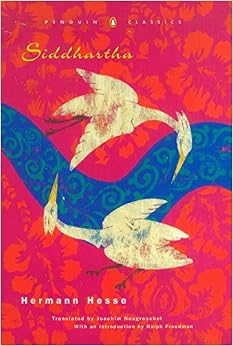
Siddhartha (Penguin Classics Deluxe Edition)

Get Free Ebook Siddhartha (Penguin Classics Deluxe Edition)
We believe that you will be interested to check out Siddhartha (Penguin Classics Deluxe Edition) currently. This is a new coming book from a very famous author in this globe. No complicated guideline, no complex words, as well as no challenging sources. This book will appertain enough for you. This analysis material has the tendency to be a day-to-day analysis design. So, you can read it based upon your demands. Reading throughout completed can give you the huge outcome. As what other individuals do, lots of that checked out a book by finish could acquire the benefit totally.
This book is available in soft copy documents that can be had by you. Reading enthusiasts, many people have the analysis task in there early morning day. It is as the way to start the day. At some time, in their noontime, they will certainly also like checking out the publication. Have you started to like reviewing guide? Siddhartha (Penguin Classics Deluxe Edition) as one of referred publications can be your option to spend your time or leisure time specifically. You will certainly not should have various other useless tasks to open or make use of the time.
Reviewing Siddhartha (Penguin Classics Deluxe Edition) will give much more advantages that may generally on the others or could not be found in others. A book becomes one that is very important in holding the rule in this life. Schedule will supply and also link you about exactly what you need and also satisfy. Schedule will also notify you regarding what you understand or exactly what you have actually unknowned yet really.
fter analysis this publication, you can understand just how the people are taking this book to check out. When you are stressed making far better option for analysis, this is the most effective time to get Siddhartha (Penguin Classics Deluxe Edition) to review. This publication offers something brand-new. Something that the others does not' give it; this is one that makes it so unique. And now. Release for clicking the link as well as get this publication earlier. By getting it immediately, you can be the very first individuals who read it in this globe.
Review
Winner of the 2012 Fifty Books/Fifty Covers show, organized by Design Observer in association with AIGA and Designers & Books Winner of the 2014 Type Directors Club Communication Design Award Praise for Penguin Drop Caps: "[Penguin Drop Caps] convey a sense of nostalgia for the tactility and aesthetic power of a physical book and for a centuries-old tradition of beautiful lettering."--Fast Company "Vibrant, minimalist new typographic covers.... Bonus points for the heartening gender balance of the initial selections."--Maria Popova, Brain Pickings "The Penguin Drop Caps series is a great example of the power of design. Why buy these particular classics when there are less expensive, even free editions of Great Expectations? Because they're beautiful objects. Paul Buckley and Jessica Hische's fresh approach to the literary classics reduces the design down to typography and color. Each cover is foil-stamped with a cleverly illustrated letterform that reveals an element of the story. Jane Austen's A (Pride and Prejudice) is formed by opulent peacock feathers and Charlotte Bronte's B (Jane Eyre) is surrounded by flames. The complete set forms a rainbow spectrum prettier than anything else on your bookshelf."--Rex Bonomelli, The New York Times "Drool-inducing."--Flavorwire "Classic reads in stunning covers--your book club will be dying."--Redbook
Read more
About the Author
In the 1960s, especially in the United States, the novels of Hermann Hesse were widely embraced by young readers who found in his protagonists a reflection of their own search for meaning in a troubled world. Hesse’s rich allusions to world mythologies, especially those of Asia, and his persistent theme of the individual striving for integrity in opposition to received opinions and mass culture appealed to a generation in upheaval and in search of renewed values.Born in southern Germany in 1877, Hesse came from a family of missionaries, scholars, and writers with strong ties to India. This early exposure to the philosophies and religions of Asia—filtered and interpreted by thinkers thoroughly steeped in the intellectual traditions and currents of modern Europe—provided Hesse with some of the most pervasive elements in his short stories and novels, especially Siddhartha (1922) and Journey to the East (1932).Hesse concentrated on writing poetry as a young man, but his first successful book was a novel,Peter Camenzind (1904). The income it brought permitted him to settle with his wife in rural Switzerland and write full-time. By the start of World War I in 1914, Hesse had produced several more novels and had begun to write the considerable number of book reviews and articles that made him a strong influence on the literary culture of his time.During the war, Hesse was actively involved in relief efforts. Depression, criticism for his pacifist views, and a series of personal crises—combined with what he referred to as the “war psychosis” of his times—led Hesse to undergo psychoanalysis with J. B. Lang, a student of Carl Jung. Out of these years came Demian (1919), a novel whose main character is torn between the orderliness of bourgeois existence and the turbulent and enticing world of sensual experience. This dichotomy is prominent in Hesse’s subsequent novels, including Siddhartha (1922), Steppenwolf (1927), and Narcissus and Goldmund (1930). Hesse worked on his magnum opus, The Glass Bead Game (1943), for twelve years. This novel was specifically cited when he was awarded the Nobel Prize for Literature in 1946. Hesse died at his home in Switzerland in 1962.Calling his life a series of “crises and new beginnings,” Hesse clearly saw his writing as a direct reflection of his personal development and his protagonists as representing stages in his own evolution. In the 1950s, Hesse described the dominant theme of his work: “From Camenzind to Steppenwolf and Josef Knecht [protagonist of The Glass Bead Game], they can all be interpreted as a defense (sometimes also as an SOS) of the personality, of the individual self.” Joachim Neugroschel has won three PEN translation awards and the French-American translation prize. He has also translated Thomas Mann's Death in Venice and Sacher-Masoch's Venus in Furs, both for Penguin Classics. He lives in Brooklyn, New York.Ralph Freedman, Professor Emeritus of Comparative Literature at Princeton University, is acclaimed for his biographies Hermann Hesse: Pilgrim of Crisis, and Life of a Poet: Rainer Maria Rilke
Read more
See all Editorial Reviews
Product details
Paperback: 176 pages
Publisher: Penguin Classics; Deluxe edition (December 31, 2002)
Language: English
ISBN-10: 0142437182
ISBN-13: 978-0142437186
Product Dimensions:
5.7 x 0.5 x 8.4 inches
Shipping Weight: 8 ounces (View shipping rates and policies)
Average Customer Review:
4.4 out of 5 stars
1,954 customer reviews
Amazon Best Sellers Rank:
#37,246 in Books (See Top 100 in Books)
If only this Kindle Edition preserved the translation enjoyed in print edition, it would be a wonderful read. But, it has been badly conveyed with phrasing that destroys much of the beauty of this classic work. An excellent author's turn of phrase, is preserved by an accomplished translator; this 'rendition' does not improve the text by its use of English simplifications and re-phrasings of the original literature. It is a disservice to anyone whom thinks they are reading Hesse.Object lesson: you get what you pay for -- I wish I'd gotten the (Buddha cover art) version, that appears to be same as paperback I've well read for decades: that superior version is also available as Kindle Edition, by Hermann Hesse (Author), Hilda Rosner (Translator). Next time I'll compare 'sample' with a known edition to avoid spending even very little money on something with damaged literary quality.Siddhartha
I just finished reading Siddhartha, and I can safely say without a shadow of a doubt, that it is now my favourite book. It's simply amazing that this was published in 1922, it is a timeless breath of simplicity and creativity. Herman Hesse was known for writing semi autobiographical novels, and this one is no exception; the character Siddhartha is even recognised for his writing ability at one stage of the novel. Siddhartha is heavily influenced by Hesse's close relationship with the great Swisse psychologist Carl Jung, and it is a treat to experience the archetypal imagery that Hesse manages to bring to life with sheer mastery. The novel reads like an old mythic tale, told with simple descriptive prose, and playful dialogue: the characters even refer to themselves in the third person! While reading Siddhartha, I couldn't help but picture the novel's world as being hand drawn, like the old drawings of the Buddha and the Hindu and Buddhist mythologies of old. The book is divided into three parts, which symbolically follow Siddhartha's birth, death, and rebirth. The Siddhartha in the novel is not related to the Siddhartha Gautama (Buddha), but he exists in the same time as him, and the two cross paths in the book. Even though they are unrelated, and the story hasn't much to do with the Buddha, the novel implies that the Buddha exists everywhere and in everyone and is merely a representation of the enlightenment available to anyone, at any moment. Whether it be at the moment of physical death, sickness, wealth, sadness, or simply holding and looking at a rock, one is capable of `waking up' and seeing the inter connectedness of everything.I won't elaborate any further on the book, I would hate to subtract any of your enjoyment out of reading it yourself, and if you haven't, I urge you to. One important thing to consider before reading it however, (it is a fairly short read - roughly 80 pages) is the translation. The original was written in German, so the translation of the book can make or break it. Some translations are really poor, while others capture the essence of the novel beautifully and gracefully, like a net catches a butterfly before releasing it into the wind. Below is a extract of the book, spanning all (or at least most) of the English translations available to you, to help you choose the right version for you. I've ordered them in order of best to worst, though you might have a different opinion to me.SIDDHARTHA ENGLISH TRANSLATION COMPARISON:Dover Thrift, introduction, translation and glossary of Indian terms by Stanley Appelbaum (1998)Instructed by the samana elder, Siddhartha practiced denial of self; he practiced concentration in accordance with new samana rules. A heron flew over the bamboo forest - and Siddhartha absorbed the heron into his soul; he flew over forest and mountain, he was the heron, he ate fish, he hungered with a heron's hunger, he spoke with a heron's croaking, he died a heron's death. A dead jackal lay on the sandy riverbank, and Siddhartha's soul slipped into the carcass; he was a dead jackal, he lay on the sand, he swelled up, stank, rotted, was torn apart by hyenas, was skinned by vultures, became a skeleton, turned to dust, blew away into the fields. And Siddhartha's soul returned; it had died, it had rotted, it had fallen into dust, it had tasted the dismal intoxication of the cycle of existences; filled with fresh thirst, like a hunter it was awaiting the gap through which it might escape the cycle, where causation would come to an end, where sorrowless eternity began. He mortified his senses, he mortified his power to remember, he stole out of his ego and into a thousand unfamiliar forms of creation; he was an animal, he was a carcass, he was stone, he was wood, he was water, and each time, upon awakening, he found himself again; the sun or the moon was shining; he was himself once again, he was moving through the cycle; he felt thirst, overcame his thirst, felt fresh thirst.Modern Library, a translation by Susan Bernofsky, foreword by Tom Robbins, translator's preface (2006)Instructed by the eldest of the Samanas, Siddhartha practiced the eradication of ego, practiced samadhi according to new Samana rules. A heron flew over the bamboo forest--and Siddhartha received the heron into his soul, flew over forests and mountains, was heron, ate fish, felt the pangs of heron hunger, spoke in heron squawks, died heron death. A dead jackal lay on the sandy bank, and Siddhartha's soul slipped into the corpse, was dead jackal, lay on the beach, grew bloated, stank, decayed, was torn apart by hyenas and flayed by vultures, became a skeleton, became dust, blew into the fields. And Siddhartha's soul returned, it had died, had decayed, become dust, it had tasted the bleak euphoria of the cyclical journey, and then, freshly thirsty, it waited crouching like a hunter for the gap in the cycle where escape was possible, where the end of causality began, an eternity free of sorrow. He killed off his senses, he killed off his memory, he slipped from his Self to enter a thousand new shapes, was animal, was cadaver, was stone, was wood, was water, and each time he awakened he found himself once more, the sun would be shining, or else the moon, and he was once more a Self oscillating in the cycle, he felt thirst, overcame the thirst, felt new thirst.Shambhala Classics, a translation by Sherab Chödzin Kohn, introduction by Paul W. Morris, translator's preface (1998).Taught by the eldest shramana, Siddhartha practiced self-abnegation, practiced meditative absorption according to the new instructions of the shramanas. A heron flew over the bamboo grove, and Siddhartha became one with the heron in his mind, flew over forest and mountain, became a heron, ate fish, hungered with a heron's hunger, spoke a heron's croaking languages, died a heron's death. There was a dead jackal lying on the sandy bank, and Siddhartha's mind slipped into the carcass, became a dead jackal, lay on the shore, swelled up, stank, rotted, was torn to pieces by hyenas, flayed by vultures, became a skeleton, became dust, blew about in the fields. And Siddhartha's mind returned, dead, rotten, reduced to dust, having tasted the dark drunkenness of the cycle of existence. With a new craving it lay in wait like a hunter for the gap where that cycle could be escaped, where the end of causation could begin, eternity without suffering. He slipped out of his ego into a thousand alien forms, became a beast, carrion, became stone, wood, water--yet each time when he awoke he found himself there again. By sunshine or by moonlight, he was once again ego, was pressed back into the cycle, felt craving, overcame the craving, felt craving anew.Bantam Books, a translation by Hilda Rosner (1951). This translation is also available in a number of different editions from other publishers.Instructed by the eldest of the Samanas, Siddhartha practiced self-denial and meditation according to the Samana rules. A heron flew over the bamboo wood and Siddhartha took the heron into his soul, flew over forest and mountains, became a heron, ate fishes, suffered heron hunger, used heron language, died a heron's death. A dead jackal lay on the sandy shore and Siddhartha's soul slipped into its corpse; he became a dead jackal, lay on the shore, swelled, stank, decayed, was dismembered by hyenas, was picked at by vultures, became a skeleton, became dust, mingled with the atmosphere. And Siddhartha's soul returned, died, decayed, turned into dust, experienced the troubled course of the life cycle. He waited with new thirst like a hunter at a chasm where the life cycle ends, where there is an end to causes, where painless eternity begins. He killed his senses, he killed his memory, he slipped out of his Self in a thousand different forms. He was animal, carcass, stone, wood, water, and each time he reawakened. The sun or moon shone, he was again Self, swung into the life cycle, felt thirst, conquered thirst, felt new thirst.Penguin, a translation by Joachim Neugroschel, introduction by Ralph Freedman, translator's note (2002).Taught by the eldest of the samanas, Siddhartha practiced unselfing, practiced meditation, according to the samana rules. A heron flew over the bamboo forest--and Siddhartha took the heron into his soul, flew over forests and mountains, was a heron, ate fish, hungered heron hunger, spoke heron croaking, died heron death. A dead jackal lay on the sandy bank, and Siddhartha's soul slipped into the cadaver, was a dead jackal, lay on the shore, swelled, stank, rotted, was shredded by hyenas, was skinned by vultures, became a skeleton, became dust, wafted into the fields. And Siddhartha's soul returned, was dead, was rotted, was dispersed, had tasted the dismal drunkenness of the cycle of life, waited in new thirst like a hunter, waited for the gap through which he could escape the cycle, where the end of causes came, where painless eternity began. He killed his senses, he killed his memory, he slipped from his ego into a thousand different formations. He was animal, was carcass, was rock, was wood, was water, and he always found himself again upon awakening. Sun was shining or moon, he was self again, swinging in the cycle, felt thirst, overcame thirst, felt new thirst.Barnes & Noble Classics, a translation by Rika Lesser, introduction and notes by Robert A.F. Thurman (2007)Instructed by the eldest of the shramanas, Siddhartha practiced moving away from the self, practiced meditation, following new rules, the shramanas' rules. A heron flew over the bamboo forest--and Siddhartha took the heron into his soul, flew over the forest and the mountains, was the heron, gobbled fish, hungered as a heron hungers, spoke heron croak, died the death of a heron. A dead jackal lay on the sandy shore, and Siddhartha's soul slid inside its corpse, became the dead jackal, lay on the strand, swelled up, stank, putrefied, was dismembered by the hyenas, skinned by vultures, became bones, dust, blew in open country. And Siddhartha's soul died, decayed, turned to dust, tasted the muddy rush of the cycle, waiting in new thirst like a hunter for the gap where the cycle would be escaped, where the end of causes, where eternity free of suffering would begin. He mortified his senses, he slew his memory, he slid out of his I into a thousand alien shapes, became beast, carrion, stone, wood, water, and found himself every time awakening again, in the light of the sun or the moon, again he was I, whirling around in the round, he felt thirst, conquered thirst, felt thirst anew.
Hermann Hesse’s Siddhartha is an absolutely amazing and engrossing tale of one man’s journey to find that all-elusive idea of enlightenment. The book’s title may suggest that it is simply a story that would have value only for people of the Buddhist persuasion, but this simply is not true. The work is well written and thought out, and it does a terrific job of showing us as human beings that often times what we are looking for is with us all along.Hesse’s book follows a young man named Siddhartha on his journey to find the true meaning of life and peace. The young man leaves his family of Brahman priests believing that they have spiritually achieved all that they ever will, and embarks with his friend Govinda down the path of a contemplative and restrictive existence. The young man soon realizes that these religious men (Samanas) also are lacking, to Siddhartha, what the path to true enlightenment really is. He continues on his journey coming by entering the company of the real Buddha—Gatama, but soon comes into contradictions with the Buddha’s teaching of removing oneself from the world. This leaves the man frustrated and lost, and eschews him down another path that is quite opposite of the one he originally intended to take.Siddhartha has now become rather restless with his pursuit of happiness, so he soon discards it for one of sexuality, greed and total reliance on the flesh. He falls in love with Kamala—a beautiful courtesan woman—and embraces the life of a merchant that furthers his greed and lustful desires. Siddhartha and Kamala conceive a son soon after their affair, but after a dream leaves Siddhartha puzzled, he becomes bored and sickened by his lust and greed, and decides to move on to find his enlightened path. With total despair encompassing his heart and soul, Siddhartha comes to a river where he soon hears a unique sound that will change his life forever. This sound signals the true beginning of his new and fulfilled life--the beginning of earthly suffering, human rejection and inner peace, and, finally, ultimate wisdom and enlightenment.The book is a harrowing tale of man’s lust for greed, power, sex and material gain; however, its ultimate purpose is to show that often times what we are looking for is in the simplest places imaginable. Hesse’s work craftily explains (through Buddhist and Hindu philosophies) that life is an all-encompassing journey that will eventually show all mankind what it is looking for. We suffer and struggle mightily through banal everyday tasks, but perhaps this daily grind of being in a symbiotic relationship with other life is what inner peace really is.
Siddhartha (Penguin Classics Deluxe Edition) PDF
Siddhartha (Penguin Classics Deluxe Edition) EPub
Siddhartha (Penguin Classics Deluxe Edition) Doc
Siddhartha (Penguin Classics Deluxe Edition) iBooks
Siddhartha (Penguin Classics Deluxe Edition) rtf
Siddhartha (Penguin Classics Deluxe Edition) Mobipocket
Siddhartha (Penguin Classics Deluxe Edition) Kindle

Tidak ada komentar :
Posting Komentar